



Another Side of the Outer Banks, in Pictures
For good reason, the beaches of the Outer Banks are why visitors come back year after year, but there is so much more to this strip of sand.
We’ve gathered some pictures taken over the past few years that show another side of the Outer Banks. All of these pictures are of the northern Outer Banks, but Hatteras Island and especially Pea Island on the north end of Hatteras have so much to see and explore.
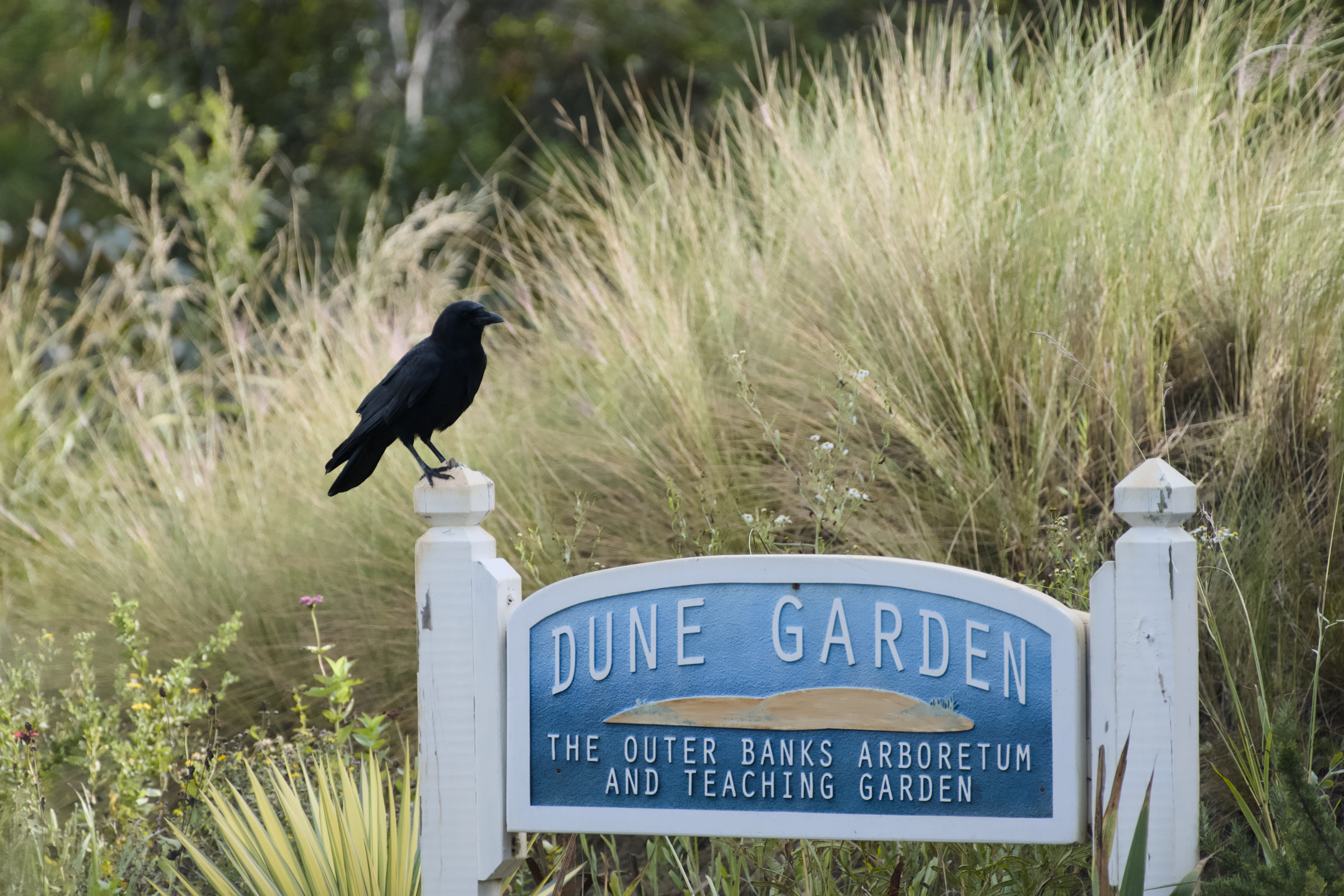
Arboretum – A crow guards the entrance to the Arboretum Dune Garden in Kill Devil Hills. An easy stroll through native trees and plants, the paths lead to Aviation Park and the Frog and Turtle Pond.
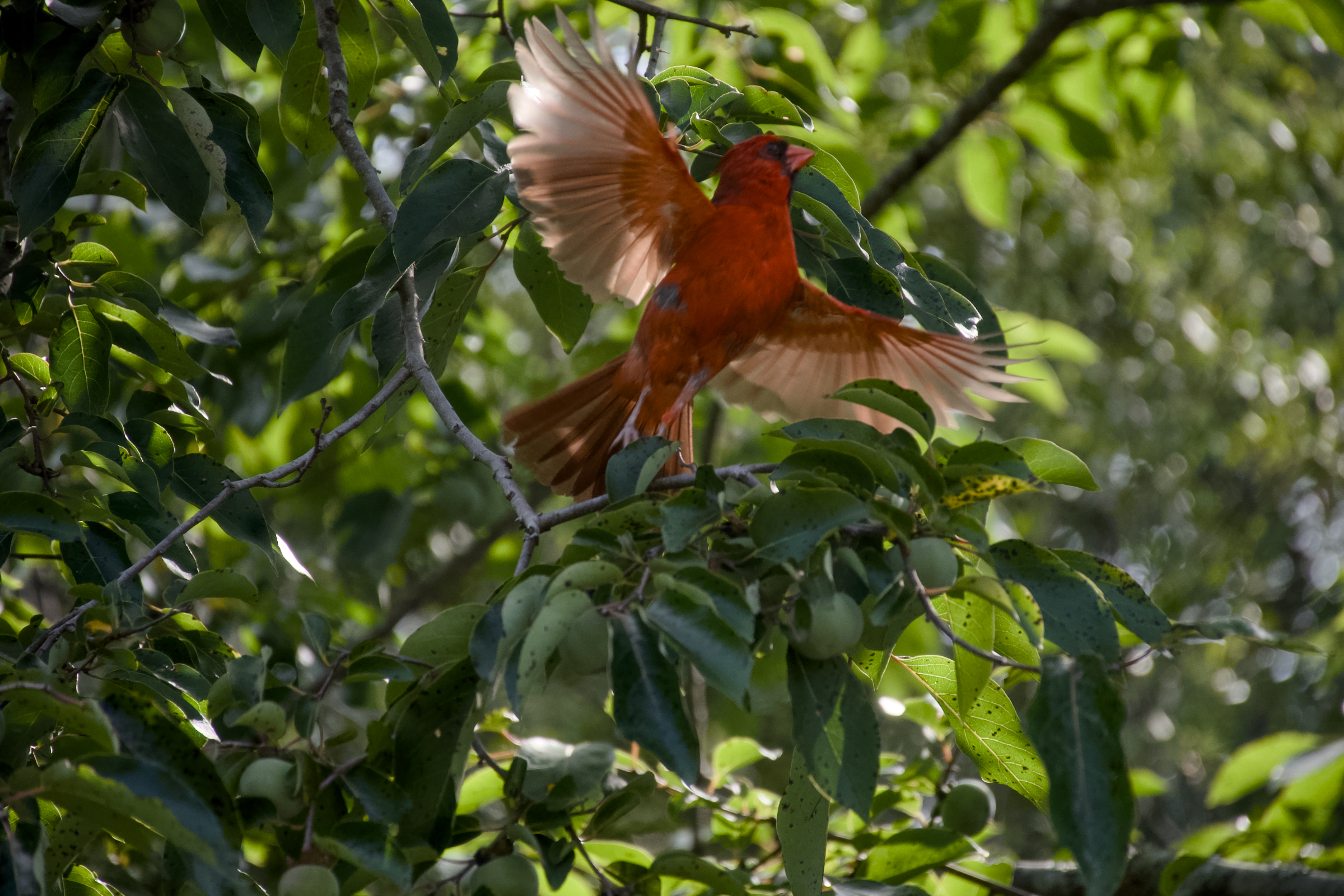
Cardinal Arbor – A cardinal takes flight at the Arboretum in Kill Devil Hills. Although a frequently seen bird on the Outer Banks, the beauty of this cardinal taking flight was irresistible.
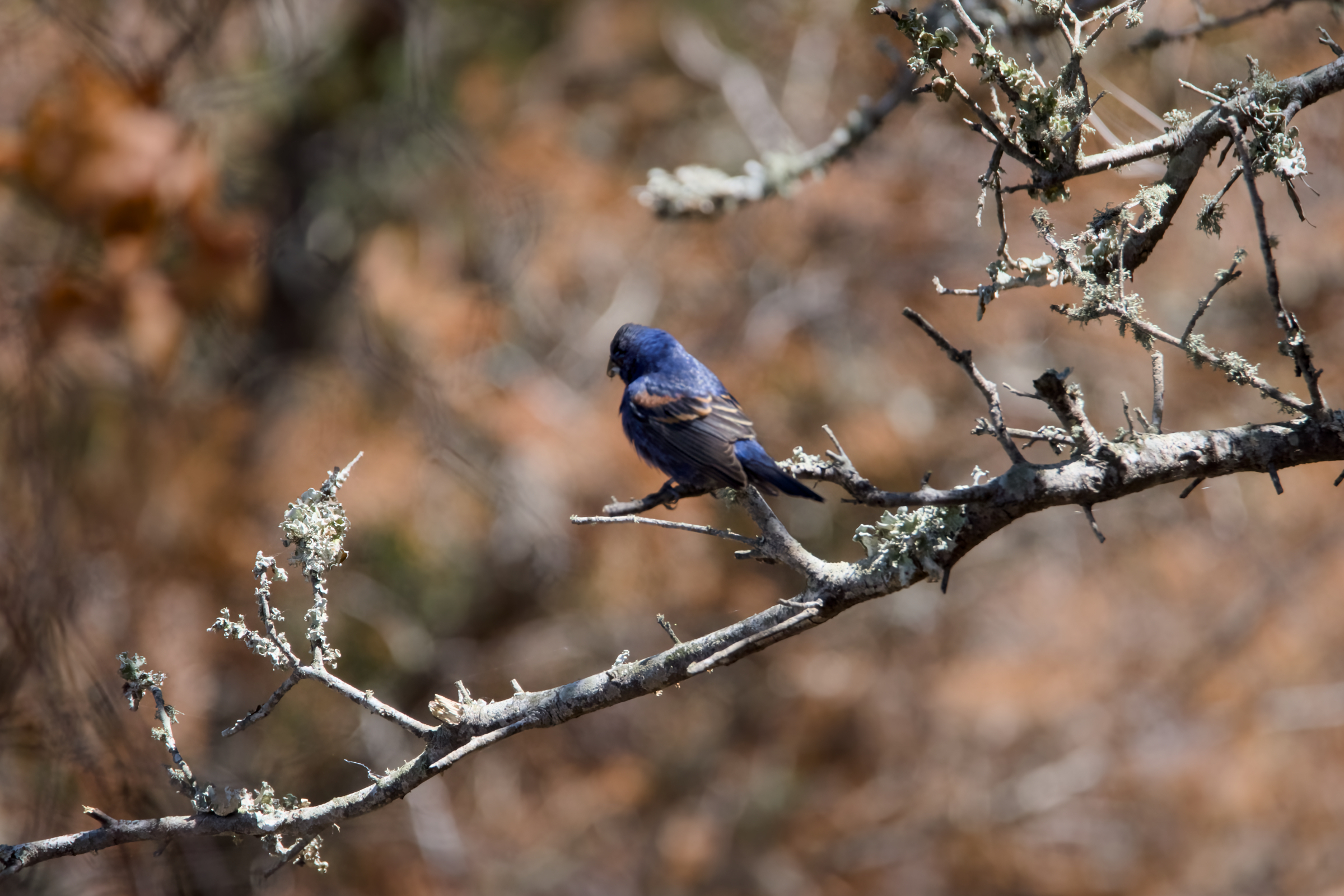
Blue Grosbeak – Blue Grosbeak, Jockey’s Ridge State Park. Photographed in early summer after a controlled burn of the small maritime forest by Roanoke Sound at the base of the main sand dune. A migratory bird that winters in the tropics, it is reported to be common in the coastal plain of North Carolina, although the photographer has never seen one before or since taking this picture.
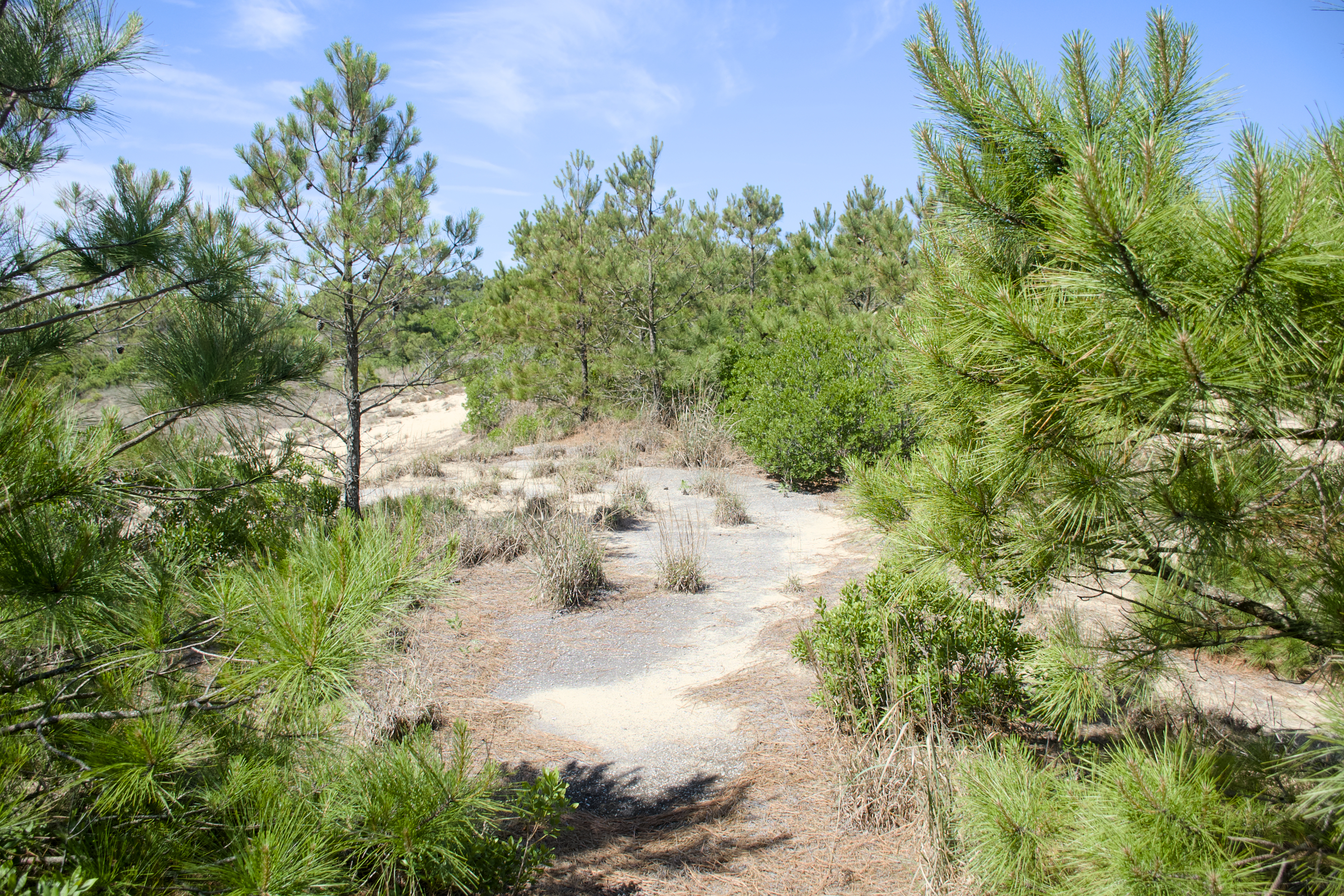
Jockey’s Ridge – South side of Jockey’s Ridge State Park. Although Jockey’s Ridge is the largest active dune system on the East Coast of the United States, thinking of Jockey’s Ridge as only a gigantic sand dune misses how complex the system actually is.
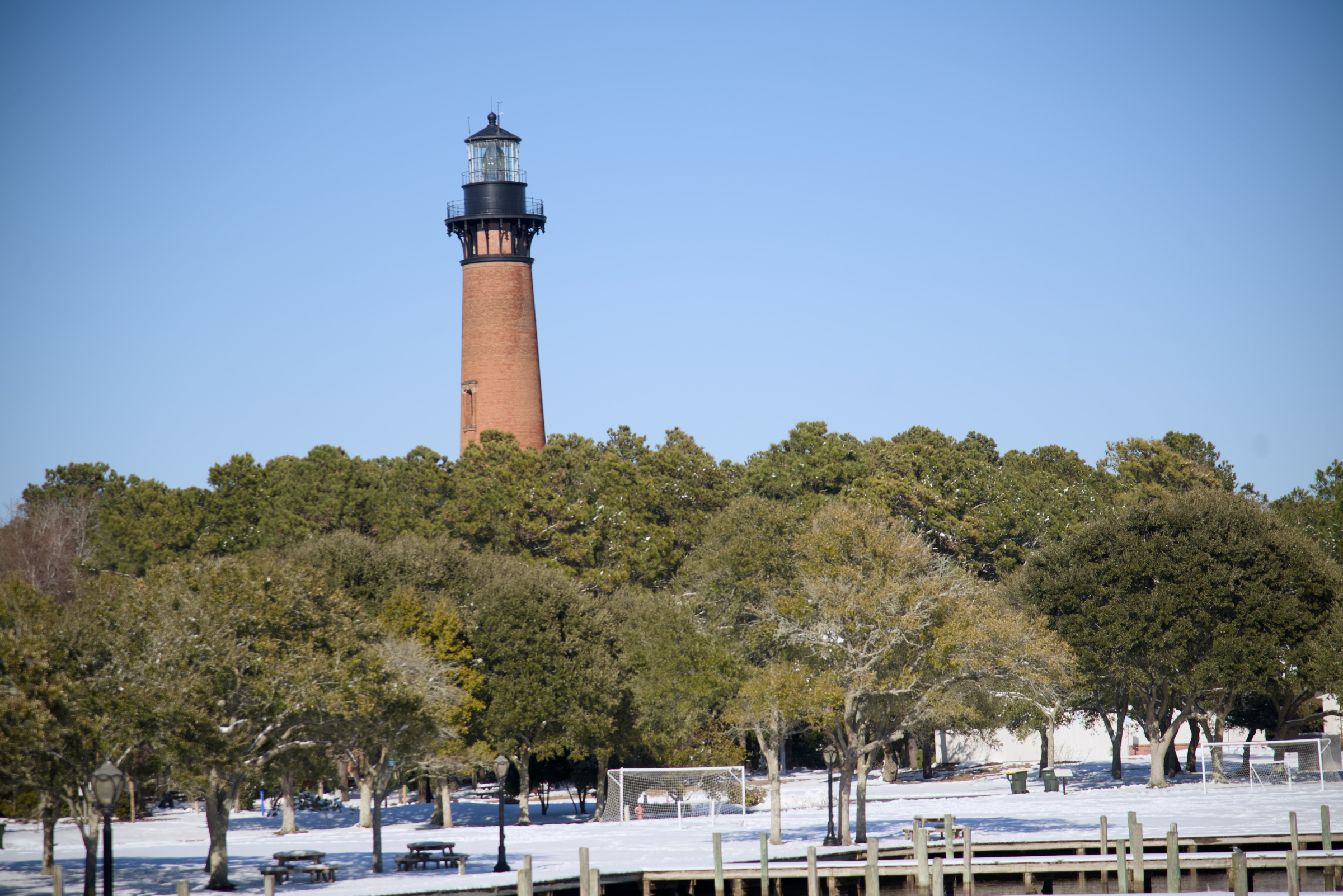
Currituck Beach Lighthouse Winter – Currituck Beach Lighthouse after a January snowstorm. Corolla, taken from the Whalehead Club pond.
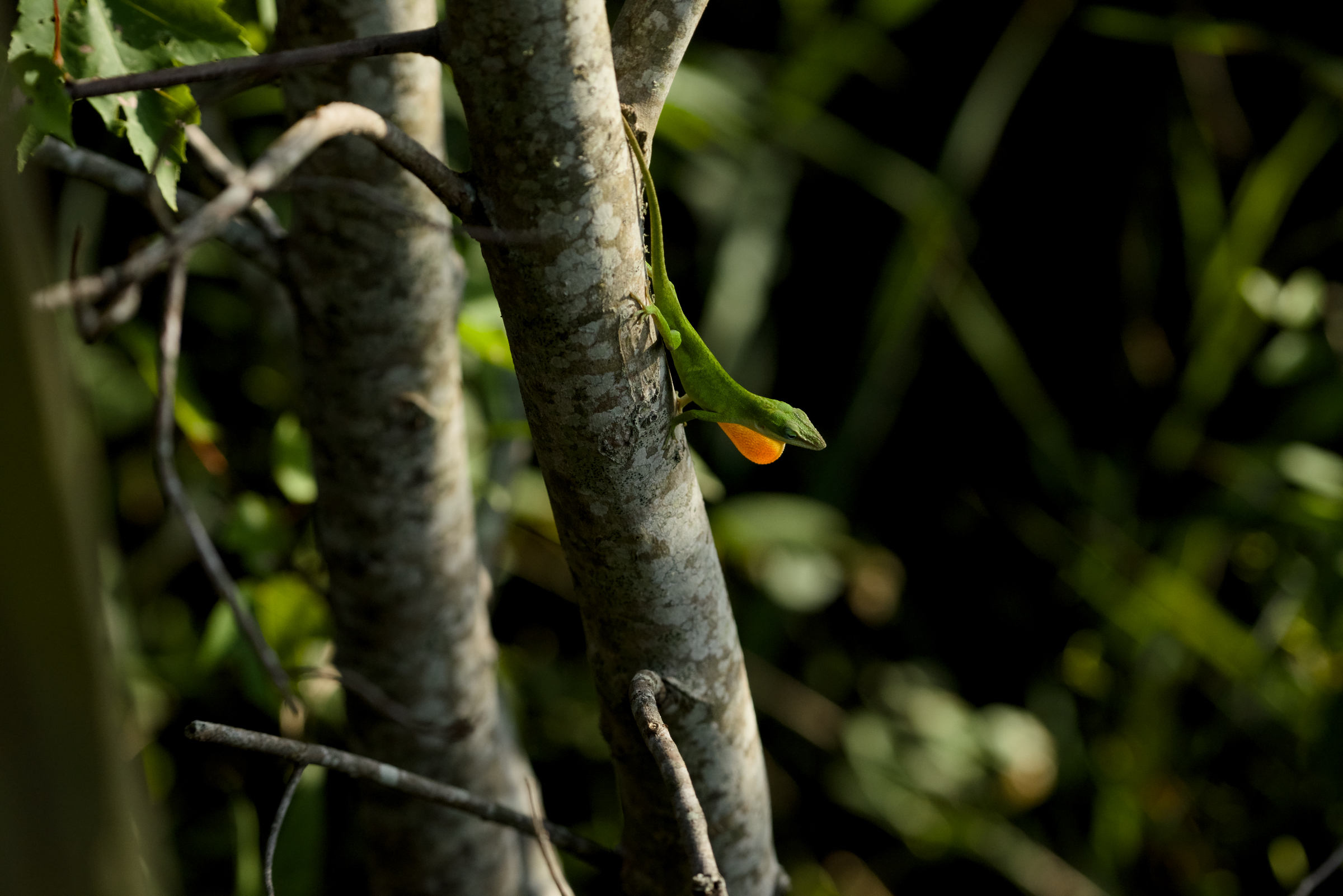
Green Anole – Male Green Anole, Sandy Run Park, Kitty Hawk. Definitely a male green anole. The picture was taken in early summer, and there is one of two possibilities for the extended dewlap—the extended reddish orange skin flap under his chin. Either he’s warning another male that the tree is his territory, or he’s looking for a mate.
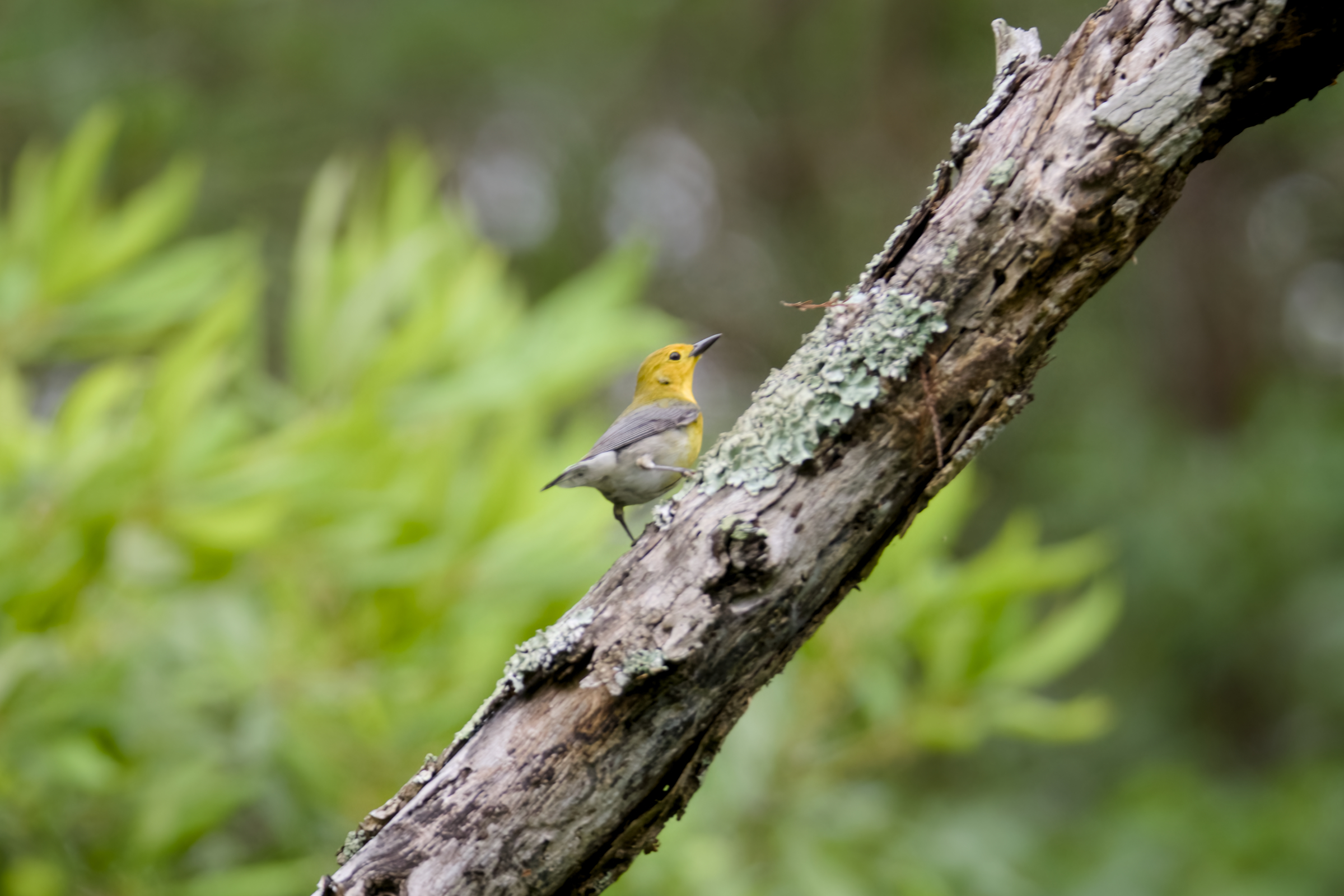
Prothonotary Warbler – Prothonotary Warbler, Sandy Run Park, Kitty Hawk. Wintering in the tropics (it’s a neotropical bird) and breeding in the southeast United States, the prothonotary warbler is especially fond of coastal North Carolina. Nonetheless, shy and fast moving, it’s rare to see one.
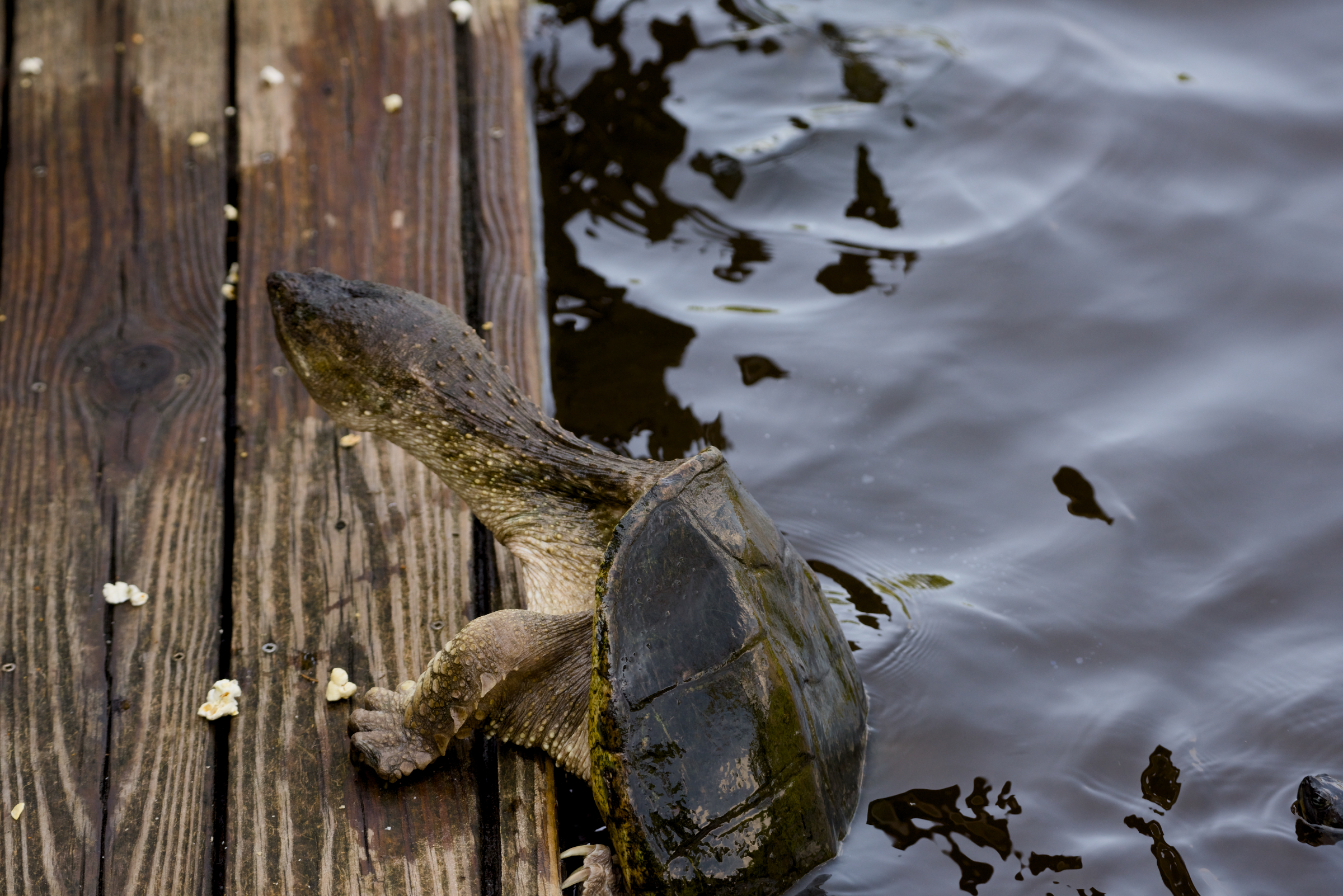
Snapping Turtle – Snapping turtle reaching for popcorn at Sandy Run Park in Kitty Hawk. Although they look fierce, snapping turtles are not considered an aggressive species, although cornering one will bring a defensive hissing and snapping. Do not put your fingers anywhere near its jaws.
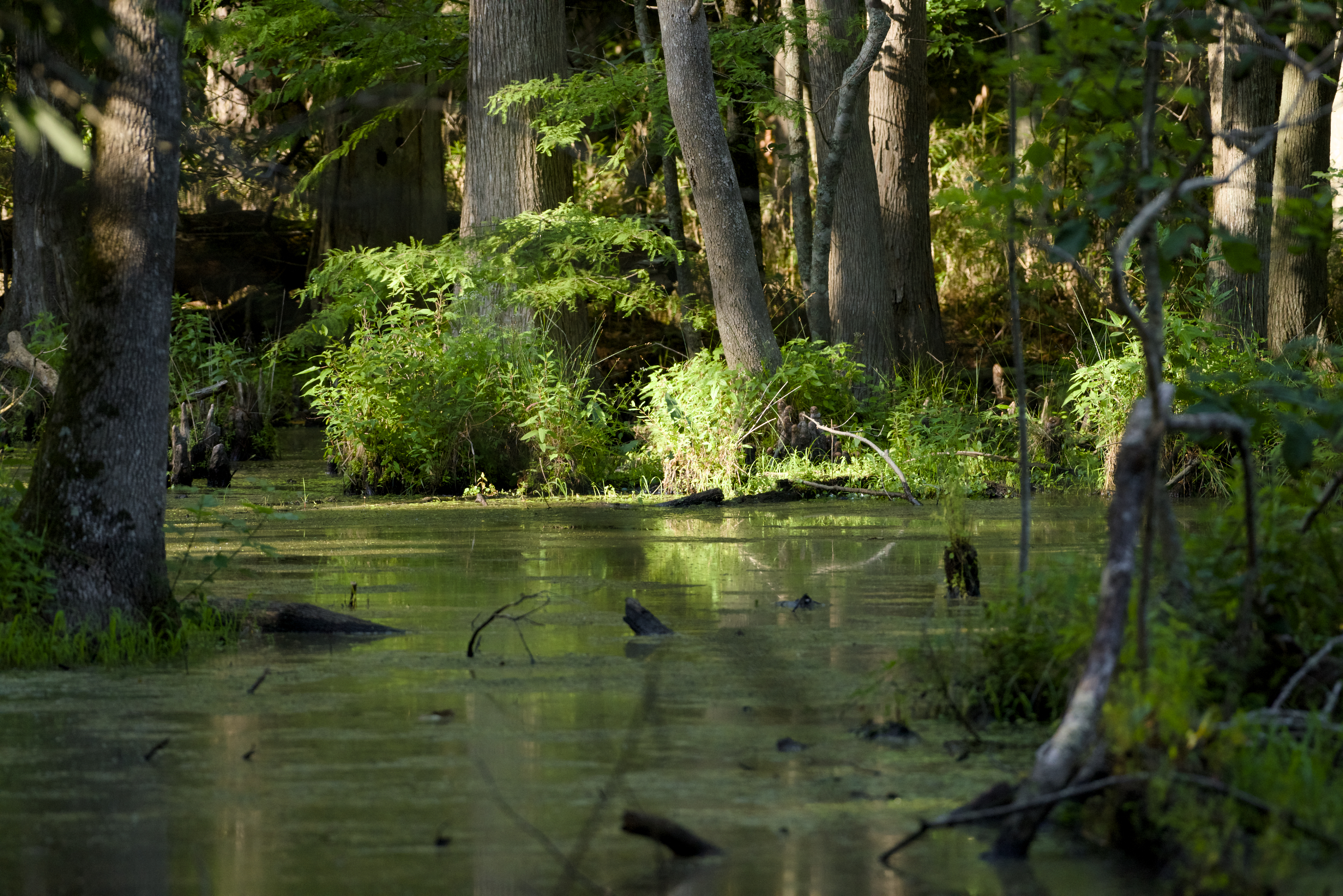
Kitty Hawk Woods – Kitty Hawk Woods along the Birch Lane Trail. At first glance, it’s a swamp, and the colors of the forest become ever more beautiful. Birds flit through the trees calling to one another and the sound of frogs singing a mating song fill the air.
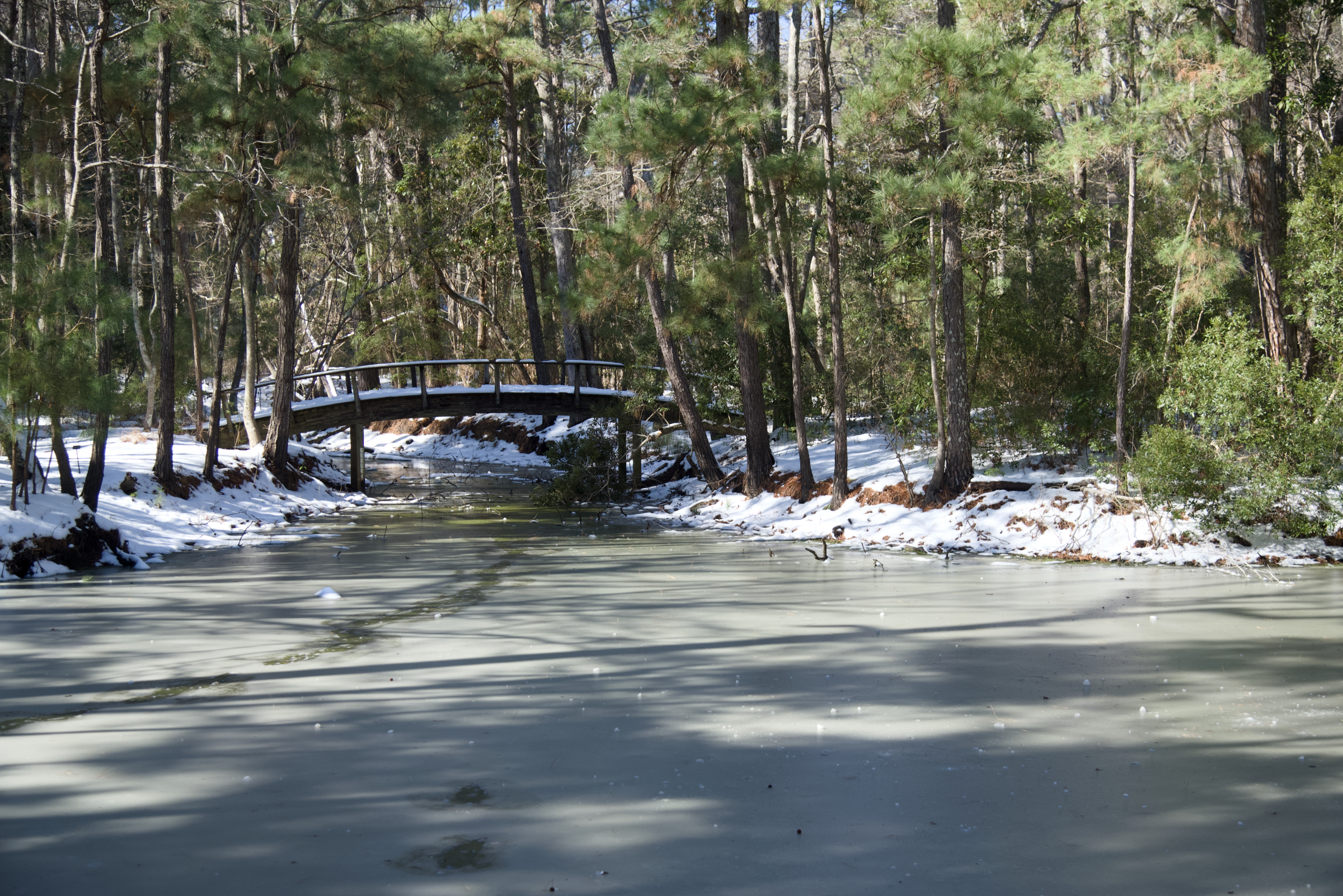
Nags Head Woods Winter – Nags Head Woods in the winter. Ponds and the sounds rarely freeze even in the winter.
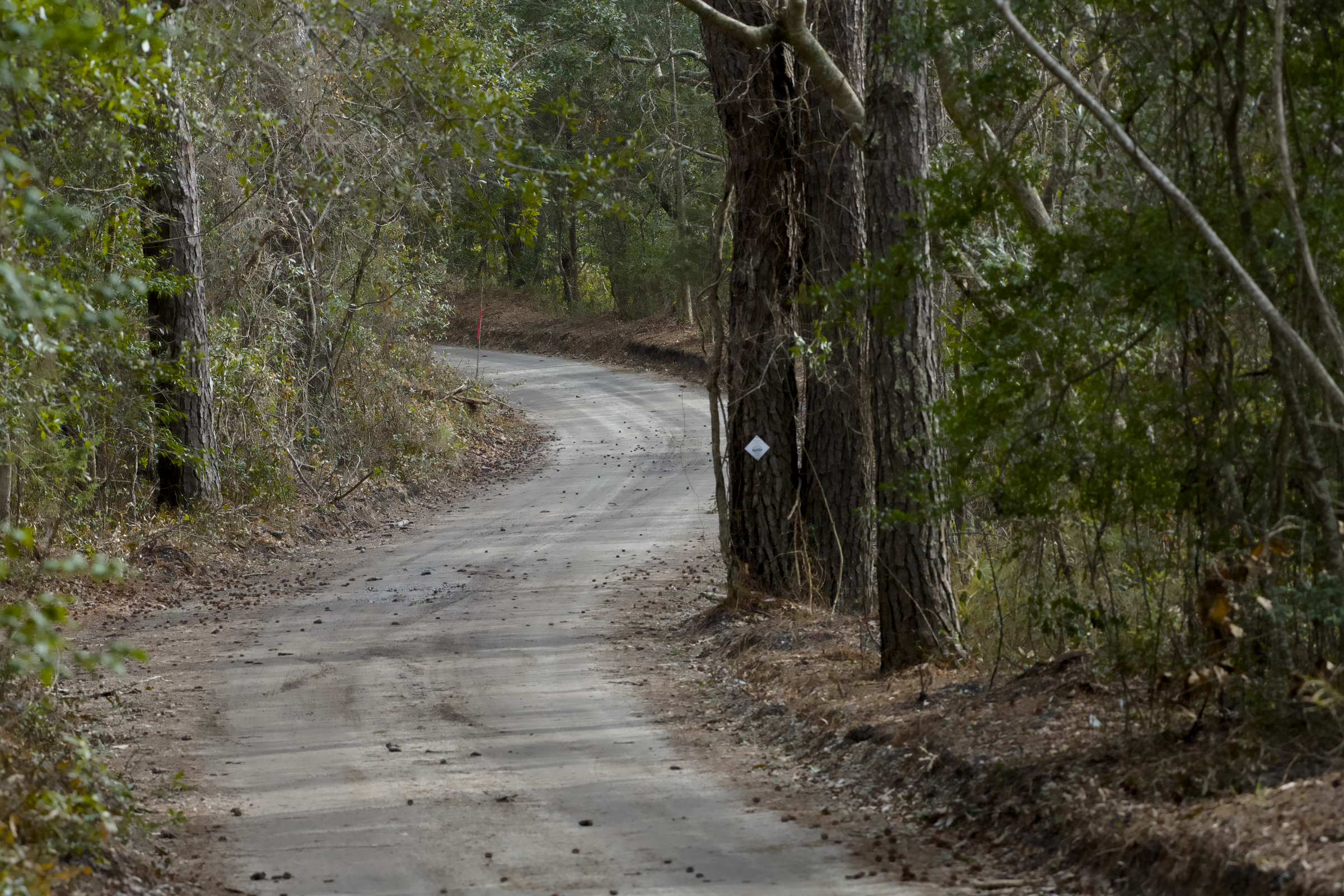
Nags Head Woods Road – Perhaps the last maintained dirt road on the Outer Banks. Old Nags Head Road, Kill Devil Hills.
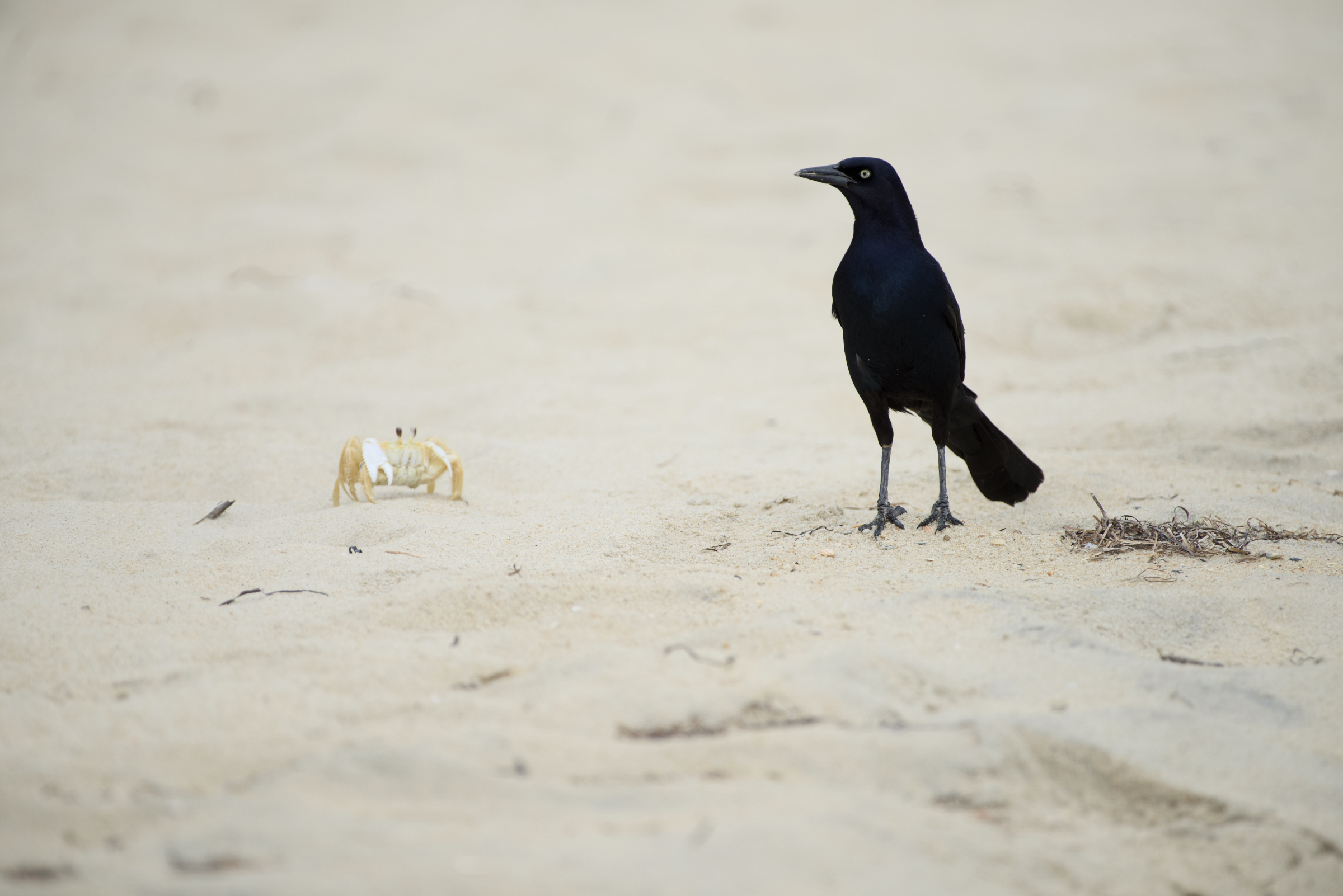
Standoff – An apparent standoff between a boat-tailed grackle and ghost crab. Although by ghost crab standards, that’s a large one, it will lose if it’s really a standoff. Nags Head Beach.
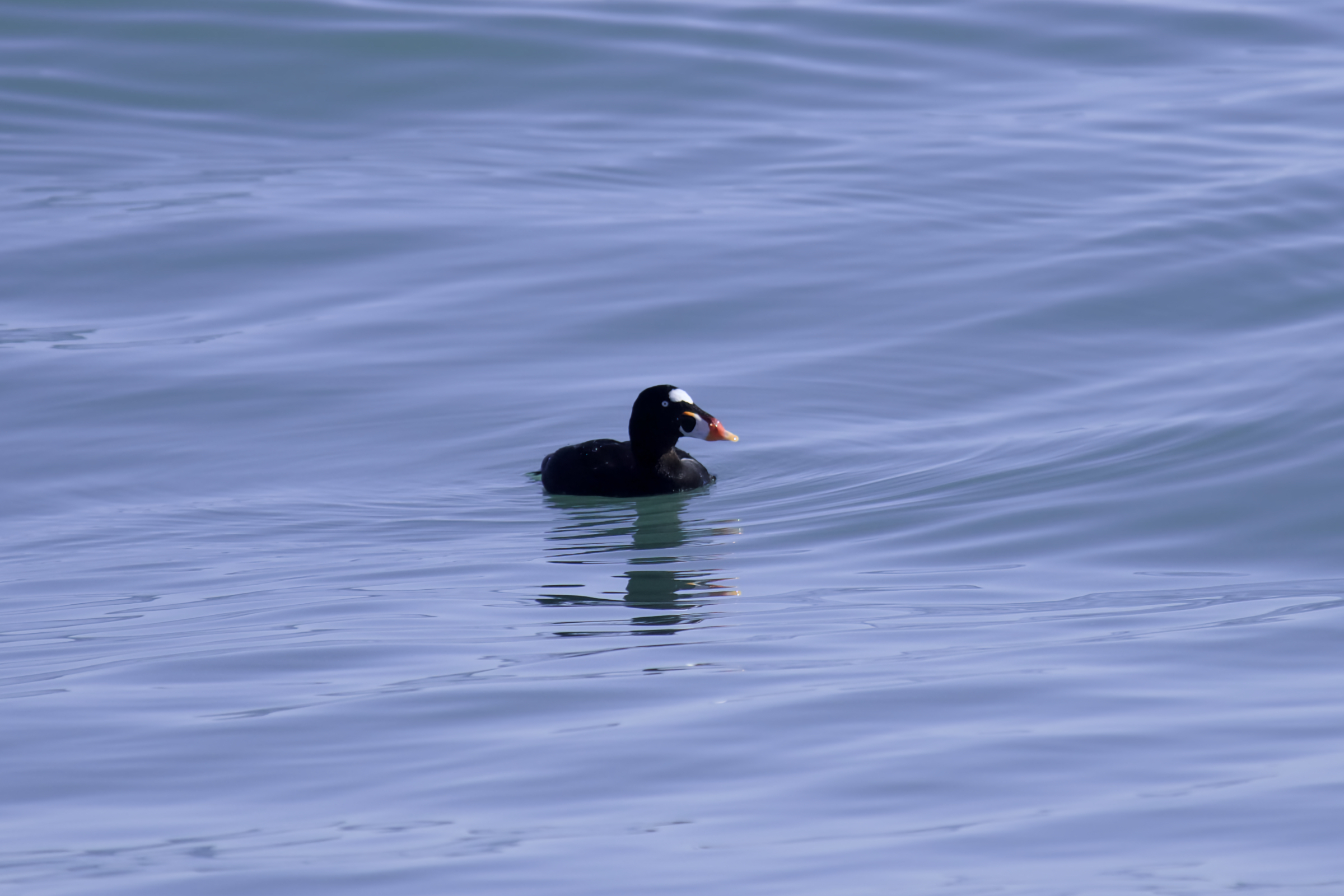
Surf Scooter – Surf scooter off the Kitty Hawk Beach. Although surf scooters are fairly common in the summer, they aren’t seen that often.
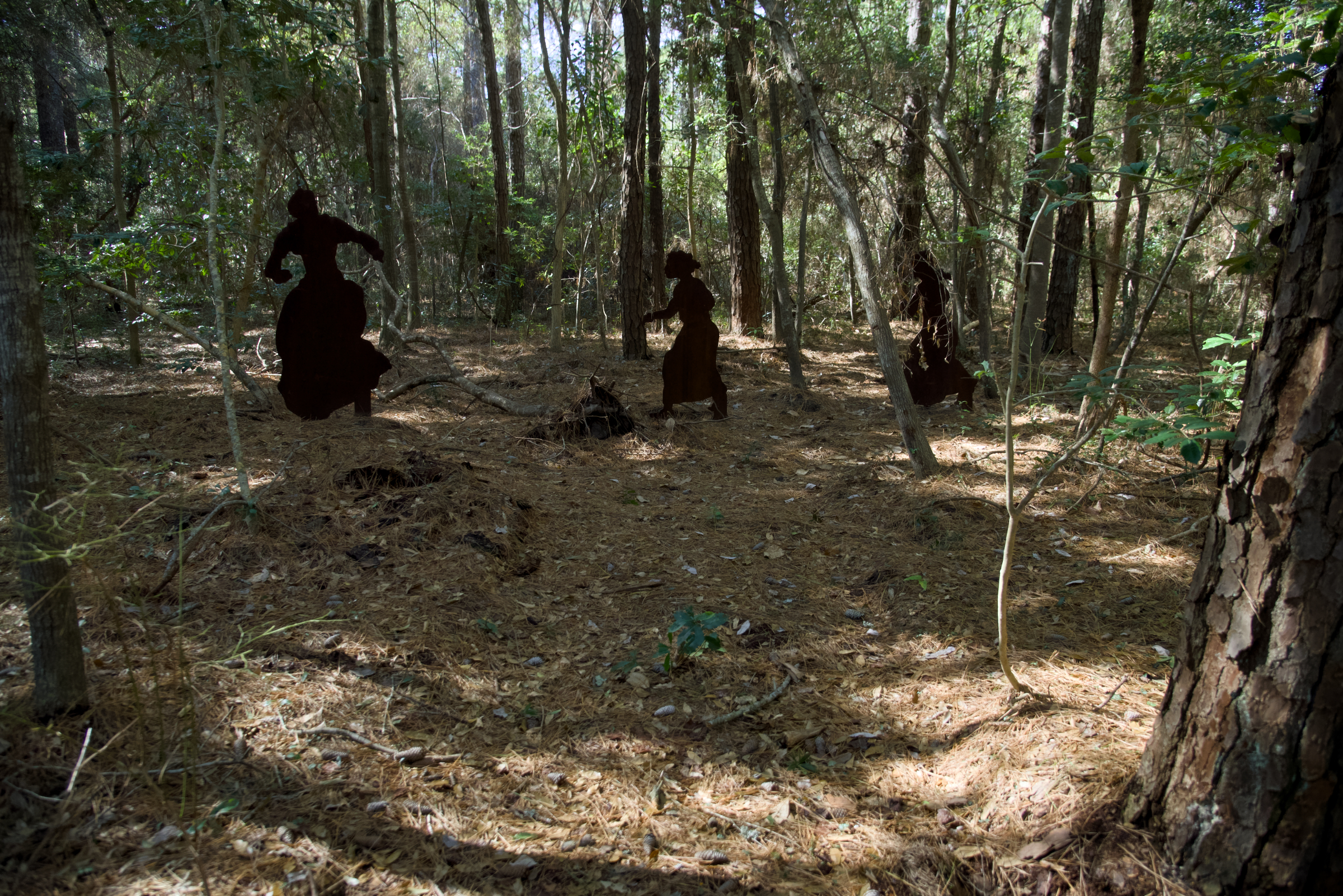
Maria Ferribee Watkins – The Freedom Trail at Fort Raleigh National Historic Site on the north end of Roanoke Island is a very easily walked 1.25 mile trail (2.5 miles out and back) through a maritime forest. The trail tells the story of the Freedman’s Colony that spring up on the north end of Roanoke Island during the Civil War. Pictured here Annice Jackson and her daughters, Maria and Alice. Annice led her daughters and herself to emancipation and to Roanoke Island.
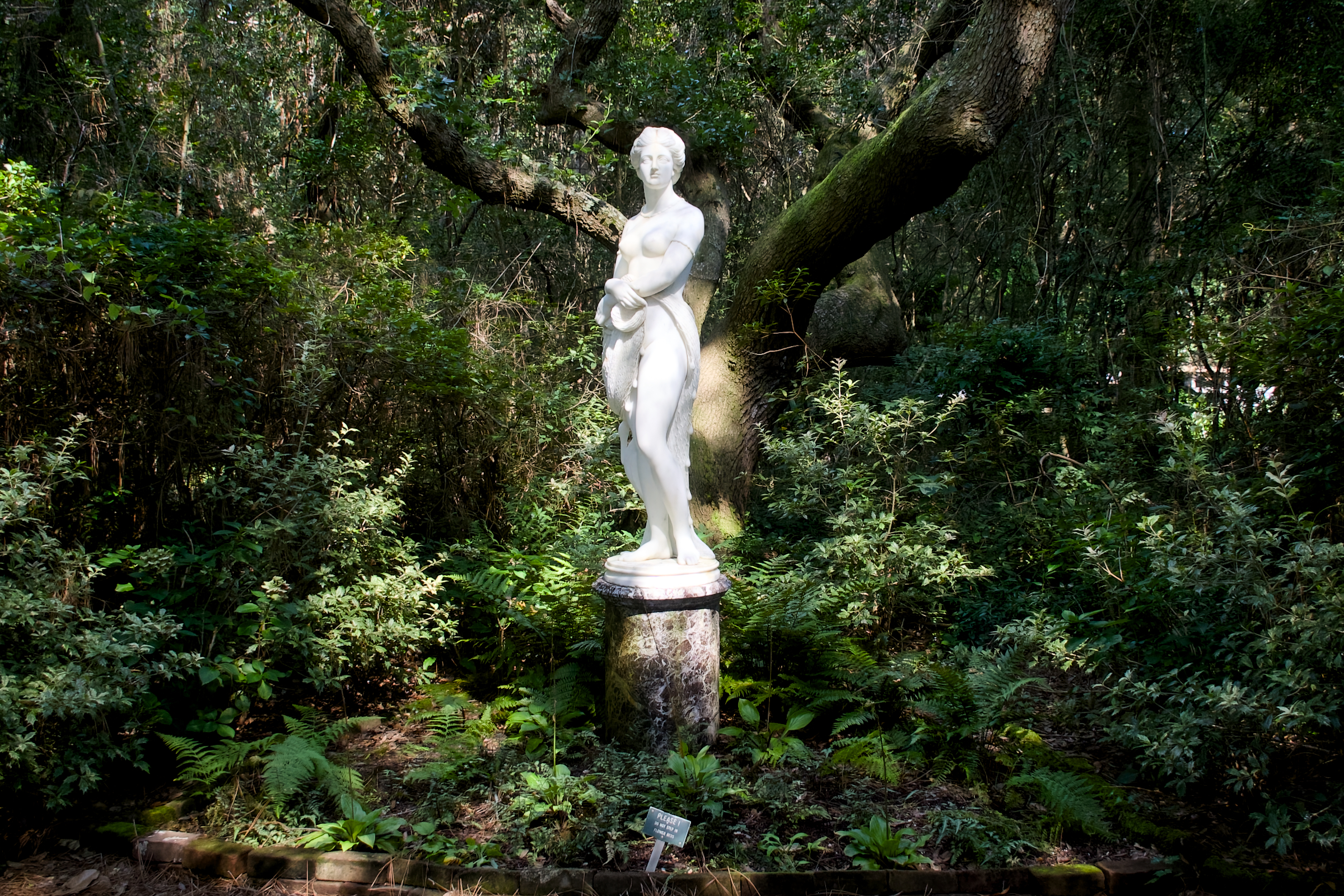
Virginia Dare – Statue of Virginia Dare, Elizabethan Gardens, Roanoke Island. Created by American sculptor Maria Louisa Lander in 1859, the statue survived an 1879 shipwreck and being stranded beneath the sea for two years. Repurchased salvagers by and restored by Lander, the statue eventually found its way to North Carolina and when in 1955 the Garden Clubs of North Carolina was building the Elizabethan Gardens, the stature found permanent home.